Budget
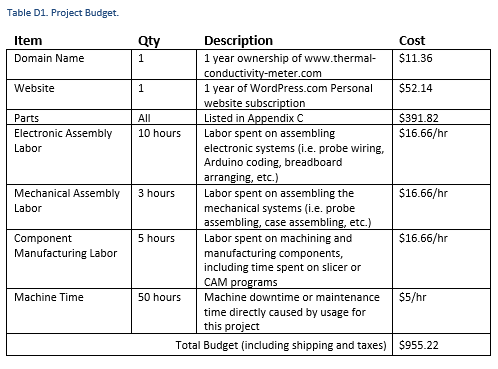
The current total project cost is estimated to be $612.52. This includes all part costs, labor, shipping, taxes, and time on machinery. The largest expense is labor, which totals $339.03 after taxes. This is followed by the parts cost, which is $240.80 after taxes. The maximum allowable project budget is $1000, which is closer to resembling the retail cost of currently retailed thermal conductivity testing machines.
Winter: The updated expected budget is $955.22. This is only ~$45 below the maximum project budget. The spending increase was caused by higher estimations of laboring/machine up time and part purchasing expenses. Many parts were purchased at high prices or high shipping costs due to urgent need, having not previously known of the necessity of the part.
Funding
The majority of this project will be funded by Isayah Bannister. Components which also could be useful in the MET316 lab may qualify for funding from the CWU MET Lab budget, per review by Dr. Choi and William Reichlin. Further CWU resources that will be used include access to 3D printers and machining equipment.
Winter: The wage of an MET Student Lab Technician has risen alongside Washington State minimum wage to $17.13/hr. This project will not take this into account and continue billing human labor time at $16.66/hr.
Purchasing
Components will be purchased from online vendors. Adafruit, Arduino, Digikey, and Jameco will be used to purchase electronic components. Mechanical components will be bought at McMaster-Carr. Materials, such as metal stock and printer filament, can be bought on Amazon.
Schedule
Fall
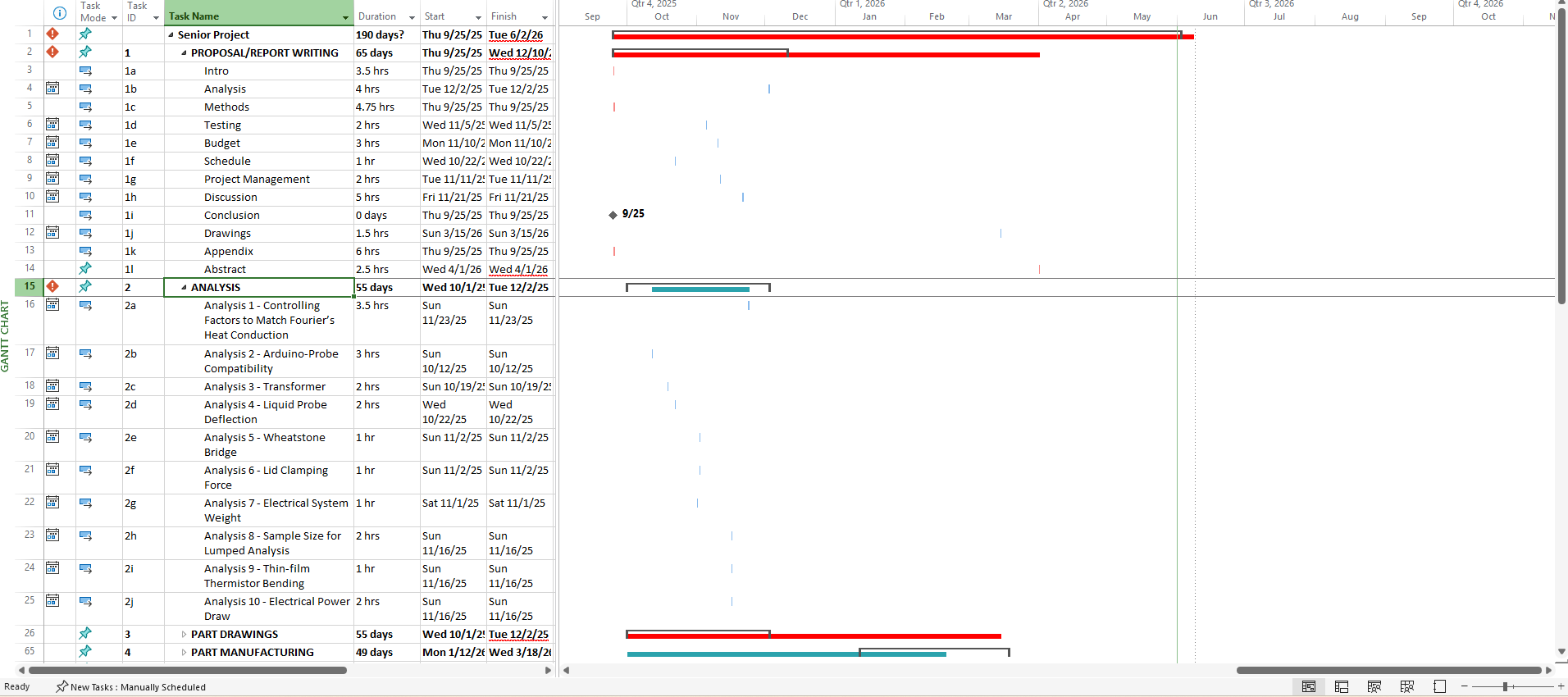
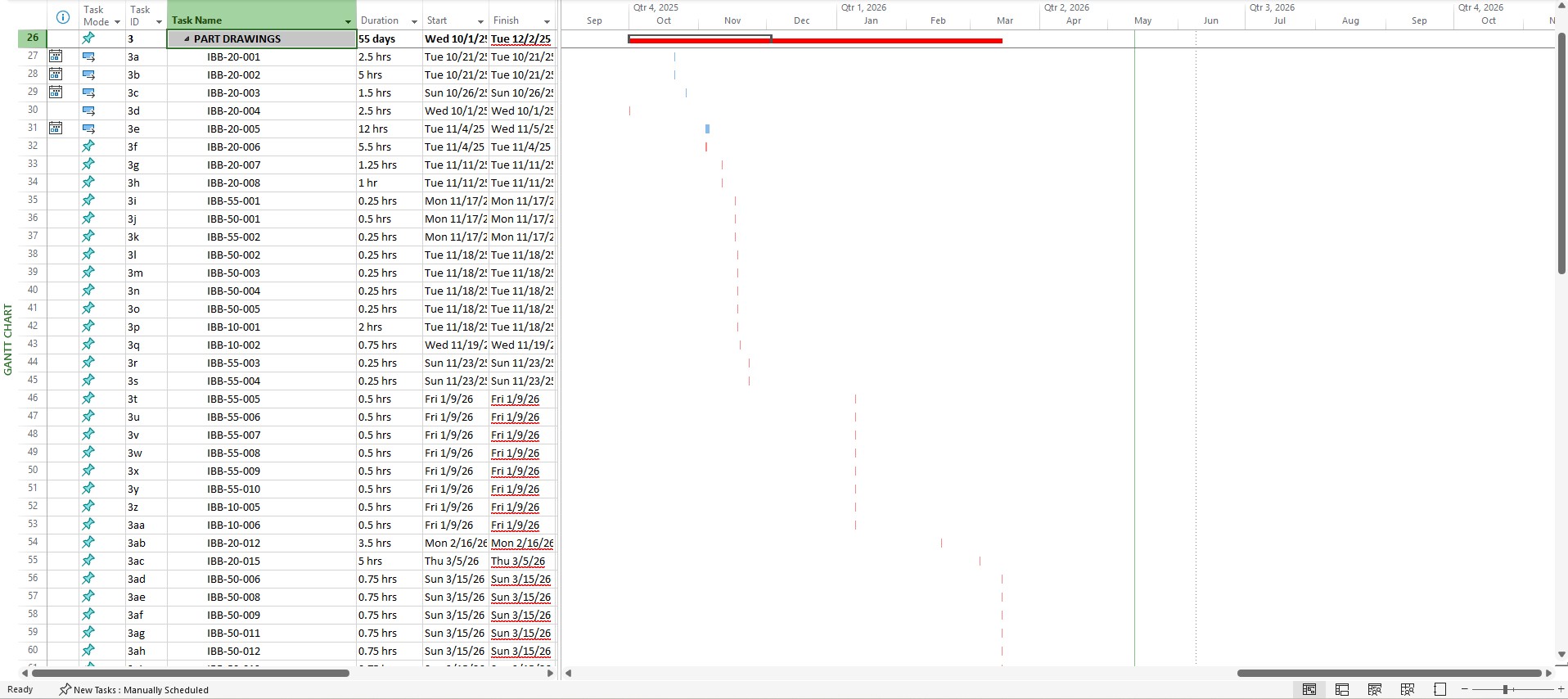
The report should be mostly done by December 10. All Analyses should be completed by December 2. Two hours every weekend has been allotted to complete one analysis, with two needing to be done every weekend. Similarly, two hours have been allotted per drawing. All drawings should be completed by December 2, but they will be revised during Winter quarter as needed.
Winter
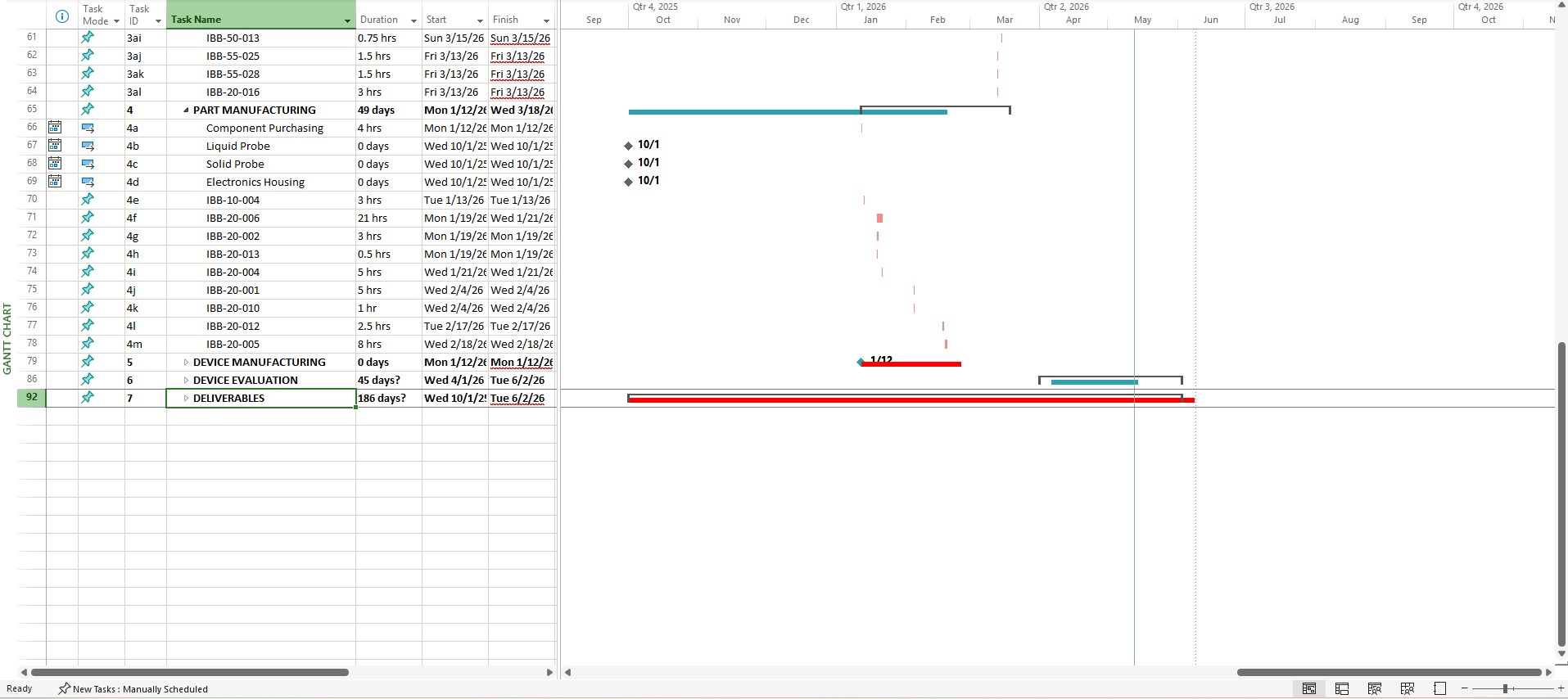
This quarter will culminate in the delivery of a fully constructed TCM. To accomplish this, all drawing documentation and manufacturing should be completed a week before the end of the quarter.
The completion of the three assemblies for the TCM should coincide with the due dates for 33%, 66%, and 100% construction completion. The scheduled time for this can be seen in Figure E3. As can be seen in the same figure, the manufacturing time for each component is not pre-scheduled. Time on component manufacturing will be logged as necessary whenever a component is worked on or completed. The goal of this freedom is to hopefully relieve some pressure while still maintaining targeted due dates for completion levels. 33% of construction was successfully completed by the due date, but the drawings had not been fully revised by Jan 23. If it becomes necessary, drawings and SolidWorks part revisions should become rigidly planned and scheduled.
Most construction deadlines were not met in time. The largest cause of this is sudden drastic revisions to the case design creating difficulties with getting drawings done, and thereby making it hard to have all deliverables completed for each submission date. Some components were redesigned to be 3D printed or eliminated entirely, but this didn’t entirely make achieving the deadlines easier. It also left more openings for further revisions or new components with functional purposes but questionable necessity.
Spring
The TCM should be fully tested, all project tasks completed, and a SOURCE presentation given before the end of the quarter.
Gantt Chart Picture #3
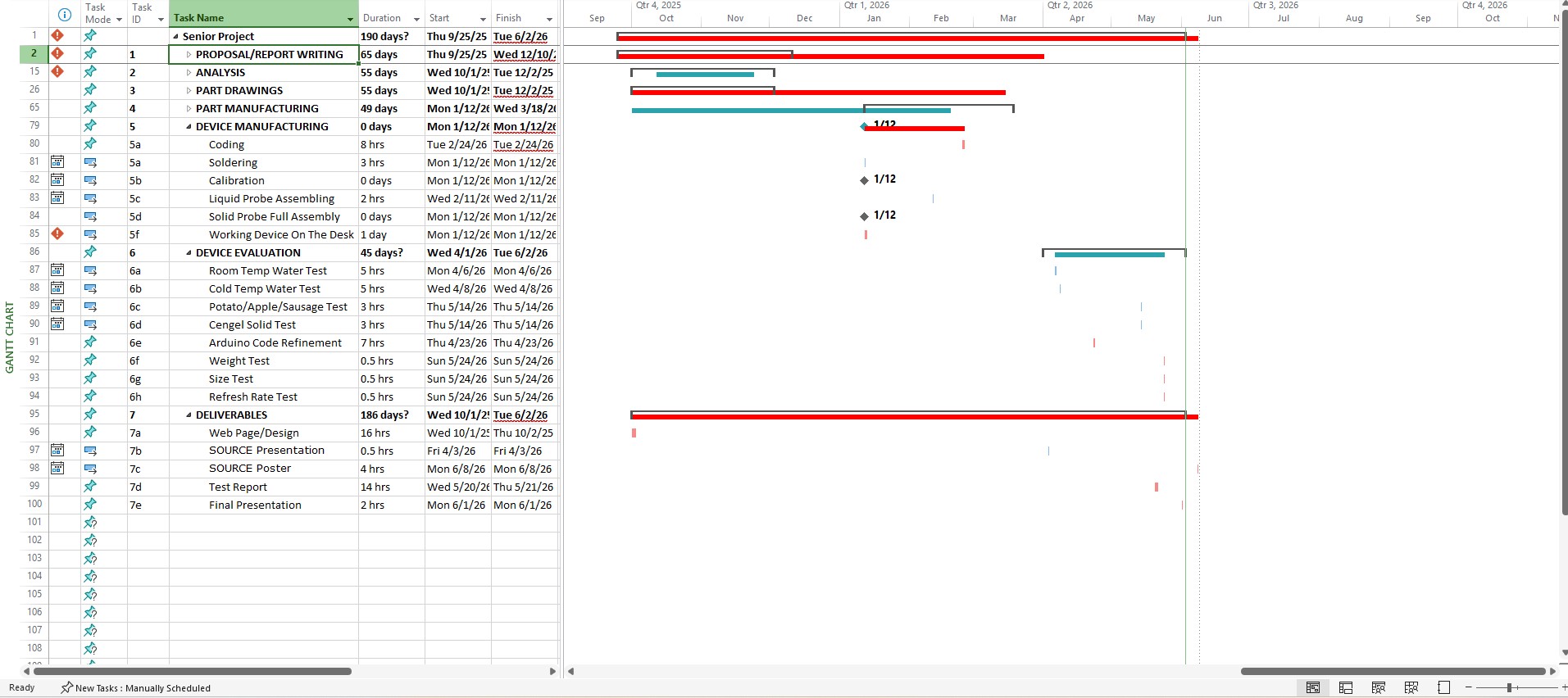
Gantt Chart Picture #4
Gantt Chart last updated 05/31/2026
 Thermal Conductivity Meter